January Books Movies February Books Comedy Specials March Books Movies TV Shows April Books Comedy Specials May Books Comedy Specials June Books TV Shows July Books Comedy Specials Movies TV Shows August Books Movies TV… More

Obsessive. Compulsive. And then some.
January Books Movies February Books Comedy Specials March Books Movies TV Shows April Books Comedy Specials May Books Comedy Specials June Books TV Shows July Books Comedy Specials Movies TV Shows August Books Movies TV… More
And I know what you’re thinking here. You’re thinking, “hey, didn’t famous author Nick Hornby tell you – you, personally – to stop annotating and cataloging the books you read?” Well, yes. Yes he did. But I can’t, and honestly, I think he knows that.

Who’s in charge of the marketing campaign for parenting? Whoever it is, you’re doing a bang-up job. You’ve convinced us all that it’s the most wonderful job in the world so long as you can… More


I recently watched the live-action version of Disney’s The Little Mermaid with my almost twelve-year-old. The original, animated version of this movie came out in 1989, when I was almost twelve, and I loved it. I loved the story, I loved the music, and I loved the happy ending where the 16-year-old is allowed to marry a man she just met. (Of course, I didn’t think of it that way in 1989, but to rewatch some of these old Disney movies as a parent is to see them in a completely different way.) Sonja, having seen the original, liked this version just fine. But Disney did not update the story as they should have for a generation of 2023 twelve-year-olds, who grew up watching Frozen and understand that you can’t marry a man you just met. Thus, sadly but perhaps not unfortunately, I do not think this film will register in my daughter’s consciousness as the original registers in mine.
If you grew up watching The Little Mermaid, or Disney movies in general, you probably have a sense that the arc of the universe bends towards justice. I know I do. But it turns out the universe likes to bend its arc towards comedy. Oh, universe, you think you’re so funny. Remember last update, when I talked of Sonja’s fifth grade teacher, whom I received daily complaints about? She wasn’t as good as the 3rd-4th grade teacher who Sonja missed terribly. Both the 3rd/4th grade teacher and the fifth grade teacher were seasoned veterans of the profession, but the fifth grade teacher wasn’t friendly or warm, and if the reports that got back to me were accurate, said some educationally questionable things. I was sure we could do better, especially since we were moving to the Shangri-La of school districts in Orange County, California. But the universe had a different plan. Instead of a seasoned teaching veteran, we got a baby. A baby with a tik-tok. A youngin’ right out of college with minimal experience. Add that to the fact that Sonja is back in what I like to refer to as a gen-pop class, and I feel like a monster. Worst parent of the century. But I think the point here – the lesson the universe is trying to teach through humor – is that there is no Shangri-La. Somewhere along the line, I got a solid education, and it’s not because I went to a good schools in good districts. I went to “bad” schools. But I had some good teachers. I have so much more to say on this but that’s not why you called. For now, let’s simply reflect on the good school/good teacher distinction, as well as what education should look like in sixth grade. Y’all can let me know in the comments if I’m right or if I’m crazy.
Back to the protagonist, as Sonja would say. She misses her old class and is not yet sold on this new school. She is very upset that they are doing the same math she did last year. I am upset about this too but don’t know what to do about it. She was also really upset that their lunchroom is outside. Oh the horror. In contrast, she was annoyed the other day when it sprinkled and the kids had to have indoor recess. Hilarious. In her previous district, they wouldn’t let the kids inside for recess even if there was a hurricane. She has a class called “innovations lab” that she likes, though it sounds like they only get to have that class once or twice a month. This class has legos and 3D printers, and what’s not to like about that? She likes her band teacher, but dislikes the fact the class is called “winds” instead of band.
Sonja had to answer the eponymous, “what did you do on summer vacation” for her class, and her answer was “nothing.” I said, “we moved; that’s not nothing,” but I understand her point. This summer was boring, especially for her, but for all of us, really. The chaos of the move, getting our things set up, registering cars, etc., kept us busy but not with fun, summertime things or things that one even remotely wants to be doing at any time of the year. I made sure we had a few fun outings otherwise I would’ve gone crazy. We got a southern California resident ticket for Disneyland and enjoyed the park on three separate and appropriately spaced days. One Saturday, I took her to Newport Beach, which was absolutely a mistake. I had no idea it could take one two hours to travel 13 miles. Afterwards, we stopped by the Old Spaghetti Factory in Newport Beach. (#15 on my list if anyone else is counting.) We also went to the farmer’s market, an independent bookstore, and an underwhelming store called Five Below that we’d heard about on YouTube. We made several trips to our HOA pool, which is always absurdly quiet and empty. I thought we should go there everyday, but as noted at her birthday party, it’s much more fun to swim with friends.


Speaking of the birthday party, Sonja has made two good friends at school that she invited over to celebrate with her last weekend. I know she wanted a bigger party and misses her friends from home, but I am impressed that she has already made two friends. She settled on Halloween theme, which consisted of a few streamers, some plates and napkins, and digging out the fall/Halloween decor a little early. Sonja’s friends stayed the night and we went to the pool for what was a private pool party, since people here don’t seem to understand that it’s sunny. It might’ve been “too cold” last weekend – a chilly 77 degrees – but we all found it to be the perfect temperature. In fact, her two friends jumped right into the deep end without even testing the water. I’m not sure I could do that even if someone was drowning. After swimming, we went to Korean food. Sonja still doesn’t like cake so we stuck a candle in a cookie and made a wish. Then the kids stayed up late – but not catch-the-sunrise late – watching movies and making TikToks.
Other than location, there’s not that much that has changed in the last three months. Sonja still loves playing video games online with friends, watching YouTube, and drawing. She’s still super smart, super tiny, and a super picky eater. She’s more patient than she used to be, and is great at doing things that take extensive concentration, like building universes in Bloxburg, or making intricate kandi bracelets. She still melts down when things don’t work perfectly, but she’s quicker to recover.
One of our last outings this summer was to the movie theater on National Cinema Day, when ticket prices were just $4, and snacks were just as cheap. We saw Jurassic Park, which originally came out in 1993, when I was almost 15. Jurassic Park replaced The Little Mermaid as my favorite movie, and to this day, it’s the only movie I’ve seen in the theater more than once. (Thrice in ’93 and now four times total!) I had shown Sonja Jurassic Park before, but she remembered none of it, so it was superb to see her reaction to it on the big screen. And that reaction? She fell in love with Jeff Goldblum. Like mother, like daughter. And now you see what I mean about the universe having a sense of humor.


Let’s talk about evolution for a moment. Do y’all remember why I started this blog? Don’t worry – I know you don’t. I’m not that kind of confident. To refresh your memory, 16 years ago, in 2007, we decided to buy a house, and I decided to blog about the – ahem – adventure. It was harrowing, buying a house, and I remember not liking the process. (An aside: I didn’t like the process because it was littered with greed. It is also a process that doesn’t cater to people who have never been through the process, which is insulting. You shouldn’t have to work in real estate to get a fair shake. *Dismounts soapbox*) After we bought the house, I started chronicling the renovation – ahem – adventures, which I also did not like (See above reasons.) And finally, six months after Sonja came along, I started blogging about the parenting – ahem – adventure, which I find challenging, but which I also like (and also sometimes dislike for above reasons.) And now, here we are. Eleven-and-three-quarters years later.

This blog has become mainly the quarterly kid updates, especially the past few years. I also have the yearly vacation post, which I love, but overall, I haven’t been visited by the muse much lately. The pandemic wasn’t helpful, that’s for sure. I’ve been living in this space in my brain that tells me that there’s nothing to say here, in a public forum, because everything in my life is the same. (Not that that has ever stopped anyone on YouTube.) But that’s the bizarre mindset that blogging and social media have given rise to. The idea that if I don’t have something novel or beautiful to show, then I can’t contribute to the “conversation.” Even when there’s a shortage of excitement in life, there’s no shortage of thoughts. I’m always thinking thoughts, philosophizing, agonizing and obsessing, all of which is likely better to have recorded than, say, breakfast.
I say all of this for a reason, but we’ll get to that. First, let’s do the update:
Sonja’s just about ready to finish off the fifth grade. Our school goes late into June this year, and she’s got about a week left. It’s been a challenging year with a challenging teacher, but this year, more than any preceding it, Sonja has seen how work pays off. She studies for tests, she makes art projects, she writes essays, and she excels. She’s been frustrated at the lack of clear direction from her teacher, as have I, but isn’t that just how life goes, sometimes? When she has questions about how to do assignments that she can’t answer because, “the teacher didn’t tell us,” I tell her to do what she thinks is right. She does not like this answer. I’m sure I never did either, but years of ambiguity and feedback have taught me how to predict, anticipate and not worry too much about the consequences, since hard work is always looked upon favorably. She doesn’t understand this yet, but she will. However, I do hope that her teacher next year suits her style a bit better.

She continues to play the flute and had her first band concert last week. She received an “excellent eagle” award earlier this month, and had her name drawn twice -in a row! – for “pizza with the principal.” The class spent the year studying the United States, and she passed all her tests on state capitals, abbreviations, locations, and statehood dates. We also seem to finally have gotten a handle on multiplication and division. (Phew! The pandemic wasn’t helpful with this, either.) She made all her reading goals, and it really makes me wish that my main purpose in life was reading books so I could take tests on them. She was part of the student leadership committee this year, a role she did not choose and which she says she did not like, but still. If I haven’t mentioned it already, her artwork will be featured on the back cover of the yearbook.

Sonja has also taken up the art of kandi-making. Kandi are plastic beads strung together to make bracelets. She’s really good at this and and she doesn’t need any help from me. She also occasionally makes designs with the little perler beads that fuse together when ironed. We got the perler bead kit a while ago, and my first impression was not good. Much too fiddly for me and my patience, and for a long time, that was true of Sonja as well. But lo and behold, her patience as grown, as has her aptitude for art projects. Patience and art aptitude were never my strong suits. She continues art lessons and loves drawing. The kid that wouldn’t touch a coloring book because she wanted to draw the pictures has just continued drawing the pictures.

One might think all that work would take up all the time. Alas, all of it is dwarfed by screentime. While YouTube looms large in this house, a few movies have been showing lately as well. We saw Super Mario Brothers in the theater, which she loved. She declared it her favorite movie and bought the poster, until some meme led her to watch The Lorax, which she then declared her favorite movie. There’s no poster available, but she’s been making lots of fan art, and she had Grandma make her “Onceler” pajamas.


Somewhere in between those two movies, she developed a fondness for Wes Anderson’s Fantastic Mr. Fox. Oh and for some reason, Bluey looms large in this house. We caught some episodes in a hotel room once, and then watching Bluey in hotel rooms became sort of a tradition. And now we watch it at home sometimes, because it’s just that good. I am surprised a nearly 12-year-old would come within an inch of children’s television, but secretly I love it. It reminds me of when she was little, and it is also, again, just that good. If you’ve not seen Bluey and you’re wondering why it’s just that good (or thinking that I’m crazy), here’s a video that explains the widespread appeal.
She continues to play Roblox and video games, usually online with friends from school. I swear she knows every last person that goes to her school. It makes it both tragic and not tragic that less than two weeks after I publish this blog, we will move to a new state. Tragic that she will have to say goodbye, and not-tragic in that she makes friends so easily, I’m sure she’ll know everyone in California in no time. Sonja also finds it tragic that, after this long-ass school year, her summer break will be cut short when Californians return to school at the end of August.
And there you have it. Moving. Things will be different now, that’s for sure. There’s been so much about this moving – ahem – adventure that has been agonizing, but rather than blogging about it, I’ve just kept it bottled up inside. The cat’s out of the bag now, though, and I smell content memories. For example, I can tell you now that I have been conflicted about removing Sonja from her school and her advanced program. Not only is she excelling, but she has moved with the same cohort since third grade. However, knowing that we will change teachers, something that would not happen if we stayed here, makes it a little less agonizing. Let’s hope the next teacher is a good one.
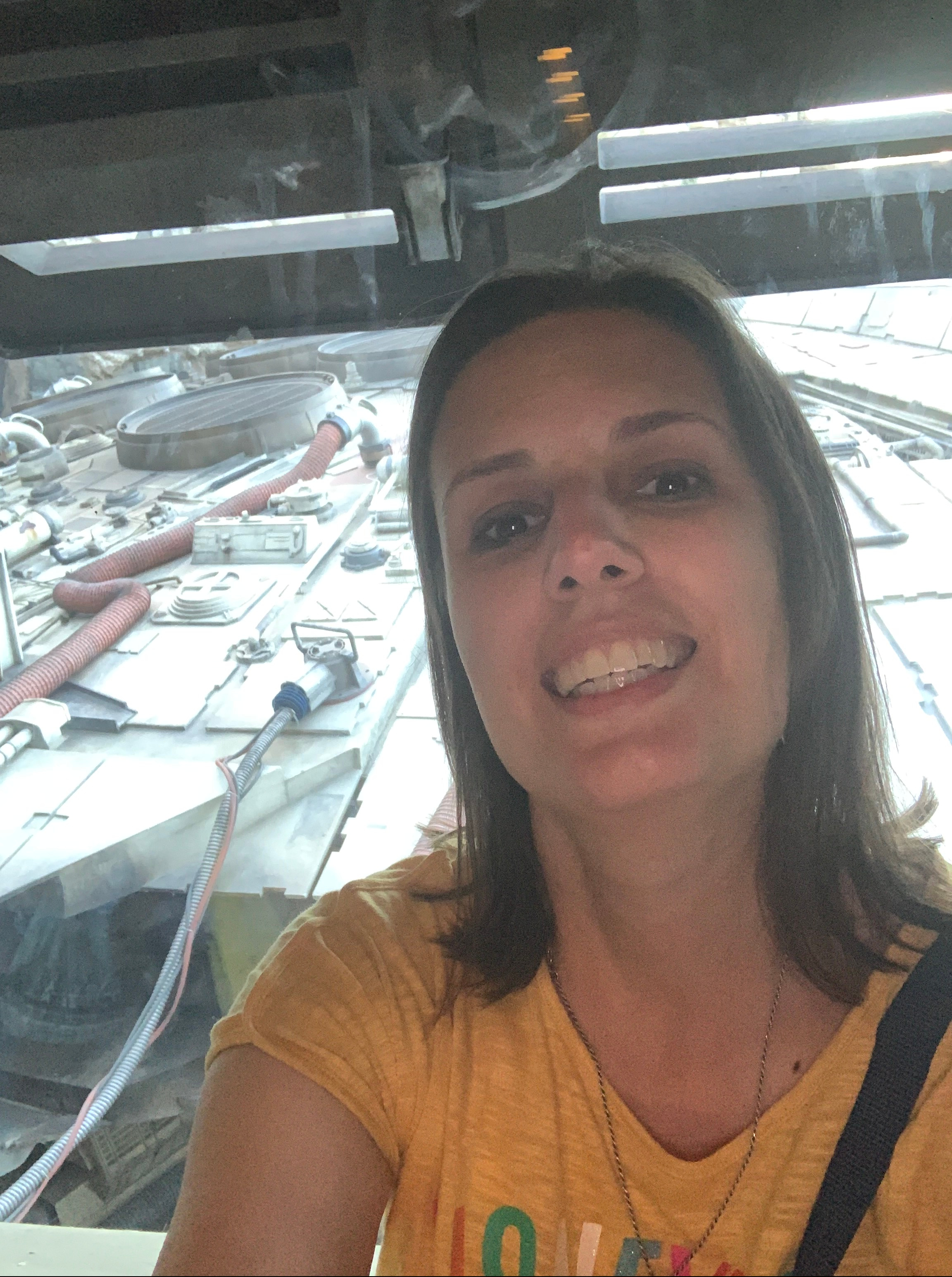
We’ve all been preparing for this eventuality for over a year now, which is good, since we’ve all had time to adjust our mindsets. Sonja, for her part, is looking forward to redoing her room. She’s nervous, as are we all, but she’s also upbeat and optimistic. Oh to be an optimist! When all is said and done, I’m sure we learn more from our children than we teach them. There’s this impulse by older generations to look down on younger ones. We think they’re ruining the world and themselves because they do things differently than we did. Baby boomers talk shit about Gen X (me), Gen X talks shit about Gen Z. But really, in every case, what’s happening is the mindset of the world is changing and if there’s one thing I support, it’s changing your mind. I may not be an optimist by nature (or as NoHo Hank says, “optometrist”), but maybe I can learn. Maybe Sonja can teach me. She did teach me how to take a selfie, so there’s hope yet.


After missing my and-a-quarter post (for the second time ever!), I’m now over a month behind on this and-a-half update. I can think of a thousand reasons for this delay, but they aren’t important. The only important thing to me is documenting the – for lack of a better word – journey. The journey of Sonja. The journey of her mom, and her dad, and her family. It’s especially important to me because my memory for life events is so very, very poor. Yet there’s a lot going on now that seems like it could benefit from the medicine of time. Which is to say, where to even start?
We could start with the phone, I guess. Sonja got a phone and is very happy about it. The original plan was to give her a phone when she was 13, but someone within this parental unit is a sucker and a spendthrift, and now here we are. We gave her the phone ahead of leaving her behind with Grandma for a week while we traveled. The phone and Facetime got extensive use that first week in lengthy and teary calls to Mom. And of course, it still gets plenty of use. It’s a lot of internal conflict for me as a parent. “Too much screen time! Too much media! But when I was 11, I could just pick up the house phone and call friends anytime! Kids need that!” There’s no conflict for Sonja, just joy. Except for the fact that we still won’t let her have TikTok or any other social media.
Before Shaun and I traveled alone, the three of us snuck in another trip to Disneyland in January. It was on this trip that we made our first visit to Knott’s Berry Farm as part of a company party. We were only there in the evening and, as mentioned just a sentence ago, it was our first visit. We were very lost. We had fun, we think, but it was too dark to be sure. This trip was short, theme-park intensive, and involved all of the usual whining. I should expect the whining by now. I have lots of previous experience to inform any hypotheses of how much whining to expect on any given trip. My hypothesis should be, “If we travel with our child, then I should expect maximum whining, because there is always maximum whining.” But no. My hypothesis is always, “If we travel with our child, then I should expect minimum whining, because she whined last time and I’m tired of whining.” I always think things like travel will be different or easier as she gets older, which makes me an eternal optimist. (Who knew? Not me!) If there is an age where that expectation – the expectation that things will be easier – becomes a reality, we haven’t hit it yet. It was still a fun trip – overall Sonja is a really good kid. The best. But she is nonetheless a kid and I constantly make the mistake of thinking my adult coping mechanisms somehow transferred to her through genetics or osmosis. They did not, and all I can do is try to help her along as she builds her own flawed coping mechanisms.


Back at home, Sonja continues to thrive in art lessons and she does great in school. Her teacher is impressed with her writing, as am I. And then there’s math. She still does extremely well, but unlike writing, the struggle is real. She has to get stuff wrong before she gets it right and she hates that. We all hate it, but most of us eventually accept that certain things take work, and we do the work. Or, as Adam Gopnik points out in his book On the Mystery of Mastery, we (as adults) avoid certain subjects entirely because we don’t like feelings of ineptitude, and then we don’t learn things. All because we’re afraid of looking bad. Sonja is at the age where she has to do the work whether she likes it or not, and I’m at the age where I want her to understand and revere the process of learning. However, saying that out loud, so to speak, makes me realize that I may not be modeling the process. Unless she’s watching me write this. She’s not, but she should be because holy shit, my first drafts are terrible. Why must writing be so torturous?
Speaking of which, I don’t have time to compose and edit anything more if I want to get this out before the next update is due, so just enjoy the pictures below.


Every year on New Year’s Eve, I am scrambling to put together a post on resolutions. Sometimes I have them, sometimes I don’t. This year, I do. I know January 1st is no more of a magic date than any other, but I have been contemplating making a few changes for a while.
First, I did not read as many books as I wanted to last year. I finished four, though in my defense there are several others that I started or am still reading. But I recognize that my lack of reading is not a lack of time, but rather a dependence on my phone, particularly social media. I have considered leaving Facebook permanently, as it used to be lots of posts from friends and the occasional ad, and now it’s just the opposite. Not only is it mostly ads, but a lot of it is click bait that I fall for. And I recognize that time spent on social media brings me very little joy. Reading books brings me TONS of joy. I underline quotes (my favorite pastime), I get excited about ideas and I relish in sharing newfound knowledge with anyone who will listen (My genres of choice are cultural non-fiction and memoir.) But rather than resolving to never check Facebook again, or read a certain number of books or hours in the new year, I am just going to promise myself to work towards reading more while looking at my phone less. I have plenty of opportunities in the day to read, but often these are small moments and I worry I don’t have time to get involved in a book, so instead I just scroll the phone. But we all know those few moments drag on way longer than intended. And while I love books that have been printed on paper, I also acknowledge that it might be worthwhile to find a few things that I want to read as e-books, and for my walks, audiobooks. Since I already have a stack of paper books to read, including a few new ones I received for Christmas, finding audio and e-books to have at the ready must be a priority. And that’s it for resolution number one. Remember that reading brings you more joy than the phone, and try to adjust your priorities accordingly.
I am also returning to la vida dairy-free. SIGH, I know. Not forever, just for a while. I have some health suspicions I want to investigate, and darn it all if going dairy-free doesn’t somehow feel like going home. I’ve done it off and on for so long, there is truly something comforting about it. But also, I recognize that most of the time, being dairy-free feels helpful. I’ve tried other things that I’ll never do again (cough gluten-free cough paleo cough.) I felt BAD when I tried to do gluten-free. I was in pain on the paleo. Dairy-free and vegan are the restrictions that seem worthwhile, but even I have to acknowledge that as a person who has to prepare meals for more than myself, and for people with no interest in being vegan, there’s only so much I can do. I digress. I tried to do a dairy-free cleanse earlier this year, and that did not last even a week. (I like cheese!) I hope to make it further this time. I want to go about three weeks without dairy, then re-dairyify on a trip I have planned, and review the results. Then I can make decisions based on the information I gather.
Tomorrow starts a new 30 Days of Yoga (with Adriene) journey. Yay! I am not making resolutions involving yoga. I do not have to. I do it everyday and it is magic. I do not need to tell the yoga what to do, the yoga tells me what to do. (What?) The only thing I want to note is that after having a prohibitively busy schedule over the last four months, and having to move my yoga from first thing in the a.m. every day, I find that doing yoga at different times of the day produces different results, and I like that. Yoga in the morning is a great way to wake up and get started with the day, but I can do so much more, especially with the more vigorous practices, later in the day. I wish I had time to do multiple yogas a day – an early morning wake-up yoga, a more intense afternoon session, and a gentle, relaxing, pre-bedtime yoga/meditation. Maybe I have this time or maybe I don’t. Again, I’m not resolving anything here except to try and follow this train of thought. I have some bedtime yoga practices on my radar, and if only I could get the child to go to sleep at reasonable hour, perhaps I could do them. As with the reading, I promise myself that I will look for opportunities during the day to do more of what brings me joy: Yoga.
There are other things I want out of 2023, of course. Lots of other things. But for now, for today, for this moment in time, this is what I’m thinking and this is what I hope to act upon.
What have I missed, or what are hoping to change for yourself in 2023?

Here is a list of (most) everything I read or watched this year. The list is (mostly) in chronological order. This year more than any other, I leaned very heavily on YouTube. While I do not think I consumed less than any previous year, there just seems to be a lot less substance. It’s something I aim to change next year.
AfterLife – Season 3
Maid
Better Call Saul – S6
My Next Guest Needs No Introduction
Nothing Special – Norm MacDonald
The World According to Jeff Goldblum – S1 & 2
American Crime Story: Impeachment
Only Murders in the Building – S2
A League of Their Own – S1
Making the Cut – S3
Sheng Wang: Sweet & Juicy
The Crown – S5
Neal Brennan: Blocks
Dead to Me – S3
Nick Kroll: Little Big Boy
Reboot – S1
Wednesday – S1
Spider-Man: No Way Home
Spencer
Encanto
Ghostbusters: Afterlife
Cast Away*
Turner & Hooch
West Side Story (2021)
Turning Red
Lightyear
Jurassic World: Dominion
Inside the Mind of a Cat
Enola Holmes 2
Glass Onion: A Knives Out Mystery
How to Do Nothing by Jenny Odell
Emotional Design: Why We Love (or Hate) Everyday Things by Don Norman
You’re Not Listening by Kate Murphy
Dickens & Prince by Nick Hornby
Yoga with Adriene (YouTube)
Hypochondriactor (Podcast)
Randomland (YouTube)
Magic Journeys (YouTube)
Revisionist History – S7 (Podcast)
Vlogbrothers (YouTube)
WheezyWaiter (YouTube)
*I rented Cast Away because I thought Sonja would like it. She didn’t, and I confirmed my suspicions that I’d never seen the movie all the way through before. Therefore, I put it on the list.

Believe it or not, when 2022 began, we were all still required (at least where I live) to wear masks. It’s been a long year, hasn’t it? There was a lot this year that felt…unsustainable. It seems that people everywhere forgot their manners, forgot how to drive, forgot that we’re all just trying to get by. Like that woman at the Target who cut in line at the self-checkout because she’d already waited what she considered a long enough time in a different line. I wish so frequently that people like this would go away. Karens and Covid are unrelenting, monotonous, and exhausting. But those are just feelings – and monotony and exhaustion deserve to be fleeting. Let’s take a look at the events of the year and see what felt unsustainable and what, if anything, felt sustainable.
We all, collectively as a nation, come together over our shared love of Wordle. Poetry should be written about the Wordle. Creator James Wardle should be placed in history books alongside Einstein for not only creating a genius game but for giving it a genius name. So excited are we by Wordle that for a few weeks, we all share our little green, yellow, and gray tiles on social media. This trend was bound to ebb, but I knew from the first time I played that my enthusiasm was encompassing, my love undying. 358 Wordles later, and not one paragraph into this post, we have a point in the sustainability column. (But only because word games and obsessions are my main jams.)
Now that you mention it, the month of January contained the eighth annual installment of Yoga with Adriene‘s 30 Day Yoga Journey. A new 30 Days of Yoga series comes out every January, with new videos released every day of the month. It was my second time following the journey “live.” (I’ve done five journeys total.) That’s another mark in the sustainability column, and actually we will need to revisit this topic in November. But until then, let’s check on what happened…
Ugh February. February is definitely unsustainable. I’ll let Roald Dahl explain why, in this quote from The Dahl Diary:
Is February, we ask ourselves, any better than January? Well, yes, in a way it is because you know that if only you can get through it and put it behind you, then the worst of the winter is probably over. On the other hand, this is usually the fiercest and bitterest month of all. I treat February like a school term and keep counting how many days there are left until it is over.
In order to pass the time a little more quickly, we visited the Funko Pop headquarters in Everett, Washington. We also stopped by BurgerMaster for a treat. Because one needs plenty of treats to get through February.
Perhaps we’ll find a little more sustainability…
We begin repairs on our guest bathroom, the floor of which is falling apart. As per usual, I think replacing the floor will be relatively quick and easy, and I am predictably wrong on both counts. We don’t just have to replace the floor, we have to replace the sub-floor and the sub-sub-floor. Since that’s not a task I can handle, I leave it to my husband and father-in-law while I abscond with the child to Vancouver, Washington to visit a friend, and then to Keizer, Oregon for another treat – In & Out Burger.
After finishing the new bathroom and leaving the tools in the hallway for far too long, I trip on a level and sprain my arm. I have never injured myself in such a way before and let me tell you… I did not like it. It took FOREVER to heal, especially for something that was not broken to begin with, and even now, vestiges of the sprain remain. Unsustainable.
Because house repairs are polygamists, never content to be alone, we also have to buy a new dishwasher, This is an entire ordeal. After reading recommendations online, I choose a Bosch dishwasher, sight unseen. After using it for approximately 30 seconds, I realize I have never loathed anything more. It’s impossible to load and it doesn’t get the dishes clean. The good news is when I go to put them away, they are as dry as if I had fished them out of a lake. I am able to return the dishwasher and get a new one, but that wasn’t how I wanted to spend April. I don’t know if I would consider home repairs sustainable, but they are definitely enduring.
Sonja gets to have a little fun in April at Sakura Con, an anime convention in Seattle, Washington. Shaun and I don’t think the experience adds up to much, especially not the price of the tickets. Sonja is already asking to go back again this year. We stayed overnight in Seattle for the convention, just for fun, and we ate dinner at the Lunchbox Laboratory. I have been asking to go back every since.
Also in April, Sonja completes a scavenger hunt at the library, and wins the drawing for the prize. I’m a little curious, since we entered the drawing the day before it was due, and because we had extensive help from the librarian to complete the worksheet, if she was either the only one who participated or they just didn’t shuffle the entries. The prize was some stickers and bookmarks – a token of appreciation.
We call Saul for the last time. It’s sad and it’s perfect. And perfect shows are never sustainable.
We return for our annual visit to Disneyland. This falls squarely in the sustainable category in that I’d like to go every year, every month, every week, all the time; It also falls roundly in the unsustainable category in that it’s expensive. Or at least more expensive than it needs to be. We took a friend with us this time – a first timer – and I explained that when she first entered the resort, everything would seem stupidly, maddeningly, ludicrously expensive, but by the end of the trip, those same prices would seem perfectly reasonable. I watched as this transformation happened, and it tickles me pink. Disney spends so much time, energy and money on the theming of its rides, yet I never knew the Haunted Mansion had a story or It’s a Small World had rooms until YouTube told me so. Sussing out the Stockholm syndrome effect of resort pricing feels like a real feather in my cap, a confirmation that I respond to feelings more so than any specific events. Who knows what we did, but I know we had fun. To paraphrase Samuel Johnson, “When a person is tired of Disneyland, they are tired of life; for there is in Disneyland all that life can afford.”
We also left the resort and visited Old Towne Orange. Here we ate at a cafe from called Watson’s that was built in 1899. It was featured in the movie That Thing You Do!, along with several other locations in Old Towne. This was a highlight of the trip in that it was a new novelty on top of the tried and true novelty that is Disneyland.
I also get to go to Hannah Gadsby’s new show, entitled Body of Work. It is so good…it is in fact Hannah Gadsby-level good, and I’ve been waiting ever since for a Netflix special. I cannot wait to see it again, and in general, I find Hannah Gadsby very sustainable. I want to hear from her often. I especially want more comedically engaging art lectures.


We all catch Covid. It is as advertised. Unsustainable and unfun.
Sonja begins what I think will be a summer fling with drawing lessons. She immediately hits it off with the teacher and I decide it is a worthwhile endeavor. I can’t draw, but I remember as a kid liking coloring books. Sonja has never been even halfway interested in a coloring book, but she has always enjoyed drawing. She was just too creative for the confines of coloring inside the lines. I don’t know how long we will keep doing art lessons, but I suspect as long as she enjoys them, there’s no reason not to keep going. I guess that means this is yet another sustainable activity.

We try hard to cram in ALL the things. Sonja and I see the traveling production of Hamilton. Hamilton is sustainable; it is like the air that we breathe. We all go to Ikea to see about (but not actually execute) remodeling the kitchen. Like I said, houses and their repairs are unsustainable but enduring. Sonja and I join friends on an overnight trip to Leavenworth, on the hottest day of the year. We have been to Leavenworth enough that one would think we could be done with it, but we always have fun when we go. Again, it’s the feeling that brings me back. I think my peculiar, non-visual memory necessitates excessive visits in order to form any navigable recollection at all. I also enjoy researching and exploring and putting all the pieces together. Leavenworth may be a tiny town, but I’m still discovering new things. We join other friends for a swim day courtesy of a new, airbnb-type website called Swimply, where you can rent someone’s private pool by the hour. We go on the best day of the year, weather-wise for this outing, and I feel all the good vibes. We cannot wait to do this again next year. Finally, on the last day of August, I have yet another birthday and this for sure is unsustainable.


Sonja has another birthday and turns 11. She also starts fifth grade, and starts playing the flute in band. She misses her third and fourth grade teacher (yes, singular), and at this point I’ve kind of given up hope that she’ll warm up to the new one. I am just grateful that she gets to travel with the same group of kids, and that they have such a tight bond.
We really get to have some fun. We get tickets to Disneyland’s Oogie Boogie Bash, and have ourselves a great Halloween outing. Was this too expensive? Yes. Was it unnecessary? Probably. Did I love being able to walk around outside in shorts and a t-shirt in October? Absolutely. Do I feel like I want to do this again. 100%.


Shaun has another birthday (unsustainable) and to celebrate, we go to Great Wolf Lodge. I absolutely loved our room on the property, even though it was an ordinary, non-themed room. It was huge with a vaulted ceiling and had a nice little patio (if only it weren’t November in the Northwest). I was feeling the cozy lodge vibes like nobody’s business, and I would’ve stayed there for a week, even without a water park in the building. As far as the water park, though, I really enjoyed the outdoor hot tub. Who knew? (Lots of people, I’m sure.) Being in hot water when your surroundings are cold (and one can breathe) is very serene. It did take a brave heart to get from the inside, where it was 85 degrees, to the hot tub. I was the first outside and I yelped at the shock of the temperature difference and hurried into the hot tub. When I turned around, my family was gone – they had retreated back inside. I stayed out there far longer than recommended and reluctantly went back inside only when I started to feel loopy. The rest of the water park was small-ish, with just a few slides, most of which Sonja was still too scared to try. She liked the arcade, where she won her first prize from a claw machine. At the end of the day, this didn’t feel sustainable. It wasn’t added to the list places we want to return to over and over again. We might be persuaded to try a different, bigger Great Wolf Lodge in the future.
We also have to buy a refrigerator on black Friday, the holiest of all shopping days. I was tired of the old fridge anyway, but a new fridge was not on my list of things I wanted to spend money on. Again with the house repairs.
Oh and remember that sustainable yoga? It is in November that I hit two years of continuous practice – 730 days and counting. (Did I say something earlier about obsessions?)
We get a little snow, and we’re treated to an “informance” by the school band. We celebrate Christmas, and we buckle up for 2023. Looking back on the concrete events of the year helps conjure the warm and fuzzy feelings, which mostly stay tucked behind the more overt and constant feelings of the day-to-day grind. Which is why I love this year-in-review post, an obligation and an opportunity to reflect on the feelings that mattered. I hope that 2023 brings me, and you, lots of warm and fuzzy feelings that sustain you all year long. Let’s meet here next December and discuss.
Two years ago, on an unassuming mid-pandemic and mid-November morning, I got out my kid’s child-sized, animal-themed yoga mat, rolled it out, and clicked play on the popular YouTube channel Yoga with Adriene.
There was no going back.
I’ve talked about yoga a lot since then. Some might say I won’t shut up about it. (No worries. I’m no stranger to diving headfirst into an obscure topic.) Whether or not you care about yoga in particular, there appears to be a huge online market for videos or blogs that describe what something indescribable is like. Usually this content focuses on outcomes as opposed the experience itself, because again, the only way to experience something is to do it.
If you happened upon the page because you are interested in outcomes, you’ll be happy to know I will tell you my outcomes. You may be less happy to know what they are. If you are expecting to read that I lost a bunch of weight and can do the splits while standing on my hands, then you will be disappointed. If obtaining a body-image related goal is important to you, then yoga may not be the fastest route. Two years into it, I’m fatter than ever. (Not because I do yoga. It’s because of the food and also because I have a terrible case of the mid-40s.) I can’t do the splits or stand on my hands. I’m not even good at yoga. I’m bad at yoga. But as with most things that I love, I love the struggle.
I have struggled these past two years to become incrementally more flexible than I was before. I’ve struggled to become incrementally stronger. And I am more flexible and stronger and I love those things. I can *almost* touch my toes! Me, with my long legs and t-rex arms! If I had video of the first time I did yoga and video of me doing yoga today, I would probably look more competent in the video today.
The one thing I haven’t struggled with is the consistency. Because I’m nothing if not consistent. It’s the consistency, I believe, that led to relief from my heel spurs. That’s actually one outcome that is measurable and immeasurable at the same time. I’d be so much more miserable every day if every day my heels hurt.
And yet, even if they did, I’d still do yoga. I am surprised to say how excited I am each day to just sit cross-legged on my mat. Sit up, close my eyes, relax my shoulders, breathe in, breathe out. That’s yoga.
Yoga is also the repeated invitation, as Adriene says, to “be here now.” It’s the constant reminders to “move/breathe like you love yourself.” It’s the gentle nudges to “meet yourself where you are today,” and it is occasionally the mind-blowing revelation that, “everything is as it should be.” I’m proud of everything I have learned so far and all of the physical improvement I have made, but I work every day to incorporate more yoga into the parts of life that happen when I’m not on the mat. To still myself and my thoughts. To remind myself of the mantras. To take a moment when I need a moment.
I started doing yoga with no ambitions and no preconceptions that I would like it. Probably the opposite, in fact, since I always expect to hate everything. Two years into it and all I really want is to be able to do more yoga. I incorporated it first into my morning routine. Only recently, I had to change up that routine because one or two mornings a week were just too busy. I found yoga in the afternoon a completely different experience, when my body was already awake, stronger and more flexible than first thing in the a.m. before food or tea. I liked that too. What I really want now is to tailor the yoga to parts of the day. I want to do an easy morning yoga, a more rigorous and strength-building afternoon yoga, and a calming evening yoga and meditation. But that’s a difficult ask when you have a job and a family and things to do to just get by. I’ve considered that maybe my job should be teaching yoga, thereby allowing more time for yoga, but if you’ll remember from four paragraphs ago, I’m bad at yoga so that’s probably not in the cards. In which case, I have to listen once again to my guru Adriene, as she reminds me each and every day that a little goes a long way.
Namaste, my friends and readers. Namaste.


It’s difficult to explain just how quickly time flies between these quarterly updates, but then I know that you, dear reader, are also a person, and thus have also seen time fly.
The summer flashed by. It began with our beloved annual trip to Disney, which took place over the last week of June. Then, the first two weeks in July were gobbled up by Covid, each one of us getting it in succession. I started us off; Sonja rounded us up. While it took Shaun and I out for about a week each, it was barely a blip on Sonja’s radar.
Things really picked up in August. It was a hot, hot month and we packed it full. It was the first summer in two years where going out and doing things felt perfectly normal. First, Sonja and I saw the touring production of Hamilton.
Then, we took our annual outing to Leavenworth, a trip I did not think would happen this year. Invited by a friend, Sonja and I made the trek ourselves. It was a quick overnight trip this year, but we managed to visit our favorite spots and squeeze in a couple new adventures, including the skate park and the river. (It helped speed things along that she didn’t take to the skate park, but I think part of the reason she didn’t take to it is because there was very little shade and it was 100 (literal) degrees.) We hit the river on our way out of town and when we left, Sonja was asking if there were rivers we could go to that were less than three hours away from our house. Yes kiddo, yes there are. Should we get out more?
We also visited a friend in Seattle. We ordered pizza and ate it at the Urban Horticulture Center on the UW campus. My friend and I sat on a bench underneath a shady tree and Sonja sat on the picnic blanket I brought. She had such a good time that she asked if we could go back to that exact same spot and eat pizza again, and I just couldn’t say no to a request to sit outside under a shady tree from my screen-addicted kid. We went back at the end of August on another hot day. After the picnic, we walked around even though it was too hot to do so. We saw ducks and frogs and climbed a willow tree and had another good day.
We also used an airbnb-like app to book a few hours of playtime at a private, residential swimming pool. Sonja and I have since agreed that this might qualify as the highlight of a very packed (for us) summer. I took a friend and Sonja took a friend. We went on the absolute perfect day, weather-wise. We ate lunch together when we arrived and spent the rest of the time swimming. Before we went, I was concerned that 3-hours in a pool might be too much. It turns out that when you have a perfectly-temped pool all to yourselves on a perfectly-temped day, and the three-hours consists of floating around, soaking up the sun and chatting with a friend, well that’s maybe the best way a person can spend three hours. This adventure was immediately added to our list of must-do, annual outings.


I’m always sad to see summer go, but I’ll truly mourn the loss of this summer. Plenty of time for outdoor fun, and plenty of time for video games, video chats, and YouTube. Now, it’s back to the grindstone. Two weeks ago, Sonja began fifth grade. One of the highlights, in my opinion, of the accelerated program she attends is that she gets to travel through the grades with the same group of kids. Most of the people she invited to her birthday party were from her class, and after observing them in the wilds of the Catapult Adventure Park, I can say that they are a hilariously and alarmingly tight knit group.
Another advantage of the program is traveling with the same teacher for two years instead of one. Or at least I’m sure that’s what I said last year. This year is the transition year. There’s a new sheriff in town. And if you’ll permit me to mix my metaphors, let’s just say that the previous act is a hard one to follow. I’ve tried to convince Sonja that this is an adjustment period and things will smooth out eventually, but she is having a hard time.
Sonja gets to join band this year and as noted previously, she will be playing the flute. I was surprised to hear that she would be one of only three flute players. “No one wants to play the flute,” she said. “Impossible!” I said. Most every girl wants to play the flute, don’t they? That’s how it was when I was in school. A row of flutes that went on for days. Of course, back then, in the stone ages, the school I attended only had a band. Sonja’s school divides the students amongst strings, which they call orchestra, and winds, which they call band. Apparently everyone else wants to play the violin. Apparently the orchestra director is cooler than the band director. But Sonja is sticking with the flute, and was proud that when she play tested the flute at school, the instructor called her a natural. She admitted that she had been practicing. Band starts meeting soon and I look forward to providing an update next time.
Outside of school, Sonja is taking art lessons. I’m not sure how long we’ll do this, but she loves it for now. It wouldn’t surprise me to see her excel at the flute, because as they say the apple doesn’t fall far, but it is remarkable to watch her journey as an artist. I can’t draw and never could. It makes me disinvested in art lessons in a way I can’t be from music lessons. I don’t know what’s involved, I don’t care if she practices, it’s all up to her. It’s a good dynamic for both of us.
As for the miscellany paragraph, Sonja had a jump in height, bringing her in to the 10th percentile. She still stubbornly refuses to reach even the 0th percentile in weight, but she has definitely been adding new foods to her repertoire faster than ever before. She will now eat garlic toast, ham and Swiss croissants from Starbucks, and pistachios. A miracle. Mushrooms and Hatsunke Miku are trending topics in our house. Pirates of the Caribbean is the incumbent favorite movie, but it has a competitor in the latest studio Ghibli offering we watched, Howl’s Moving Castle. Her show du jour and newest obsession is Invader Zim, an old Nickelodeon cartoon that was one of Dad’s favorites. She wanted to watch it after digging out a giant stuffed “Gir” from her stuffed animal storage. (A gift from Shaun to me many, many years ago.) Gir proved to be irresistible.
That’s all she (or I) wrote for summer. In two days, it will officially be fall. I might be despondent if not for the fact I have a few adventures up my sleeve for fall as well. The first fall in two years where it feels perfectly normal to go out and do things. So out we go, and I look forward to reporting back next quarter.

You do not have to be an astute or avid reader of this blog to notice that most of the titles begin with “My.” It was a deliberate choice that kicked off my foray into the genre of “mommy-blogging.” I wanted to write all about my daughter while letting my audience (ha) know two things – first, this would not be a blog filled with advice or marketable content; and two, I am the protagonist. When we started taking family vacations, I found it necessary to change the possessive pronoun in the title to “our,” to indicate that the vacation was a communal and shared experience, in case you weren’t sure. But in my yearly quest to write this long and beastly post, I sometimes lose track of who I’m writing for. I think I owe my fictional reader (and a few non-fictional readers) an explanation into the thought process that brings me back to Disneyland each year, and I don’t have one. (An explanation. Somewhere in my brain there is a thought process, I promise.) Were I not so eager to have the vacation posts stand out on my blog as the vacations do in my life, perhaps I would take the appropriate ownership.
I find it difficult in every day speech to refer to the people in my life – my husband, my daughter, my mother – by their names, even when my conversation partner has sufficient familiarity with these people. I have long thought this was a verbal tic, but it’s not. It’s me tending to the protagonist. Shaun and Sonja are people with their own agency, but when I’m narrating, they are in service of my story. Perhaps then, it is the title of these pieces that throws me off. Perhaps I need to claim ownership. When I tell stories about the people in my life, they are my people; So too, Disneyland belongs to me. I am a fan of the parks far more than I am a fan of Disney intellectual property, and I worry that this makes me an outlier. But as you already know, I am free to love Disneyland in any way I choose. I need to forget about all the people that lay claim to Disneyland in a different way, and just detail the trip to the place I go every year, which is not your Disneyland. It is my Disneyland.
And speaking of the Disneyland narrative, I can’t say that there is a whole lot to add to it that I haven’t said over the past five years. The newest addition to the park is Avengers Campus, and we saw that last year. Most of what was missing last year, in the early post-Covid reopening days, returned this year, including masses and masses of people. Everything felt like it was back to normal, and we couldn’t have asked for a better feeling in a (sort of) post-pandemic world.
We were able to cobble back together some of our canceled 2020 super-friend-trip, with one friend and one friend’s daughter joining us for two of our four days in the park. Based on the rides we went on together, my friend now considers me a “thrill-seeker.” I’m not, and believe me, there are plenty of “big kid” rides outside of Disneyland that I will stay far away from. Still, I am more than happy to take this “thrill-seeker” denotation and add it to the list of hyphenated adjectives that describe my soul, along with joy-junkie.
Here are some of the thrills we did seek this year at my Disneyland. You didn’t hear it here, but I should have more shenanigans to report a little later this fall (teaser alert!)

We tried a little harder than usual to make it to the park right when it opened this year. Though we weren’t early enough for rope drop, most days we did make it through the gates shortly after 8 am. It paid off, allowing us to knock out some popular rides early in the day, as well as allowing us the luxury of space. Disneyland is the best, but Disneyland with some breathing room is the best. The only downside is there is not a lot to eat in the park early in the day.

Character meet and greets were limited and distanced in 2021. Not so this year. Characters have never been a big draw for me at Disney, or perhaps I should say that characters had never been a big draw for me. Skeptics may roll their eyes, but magic does exist in the park. Seconds before I snapped the photo below, Sonja was being a total tired grumpy-puss. Dale saw this, came over, motioned for me to get my fat ass out of the way, and only then did I realize he was engineering a photo-op. And you can’t disagree with me that he did a fantastic job!

Disney is a huge place and even when you have four days in the park, as we did this year, you have to make choices. Since we have been able to indulge our dream of being semi-regular Disney-goers, I think holistically each trip about rides and shows and food. What do we have to do every year, and what haven’t we done in a while? We have to go on Thunder Mountain, and it had been ages since we dined at the Golden Horseshoe. We went at lunchtime and found a choice table. We were entertained by a piano player who sang You’ve Got a Friend in Me and called it, “one of the best songs ever written.” He’s not wrong about that. You’ve Got a Friend in Me is absolutely ubiquitous throughout the parks and for good reason. This year, we heard We Don’t Talk About Bruno quite a bit as well, and God bless Lin-Manuel Miranda, but these two songs aren’t in the same league.

For as little interest as I have in Star Wars, I really like to fly the Millennium Falcon. Especially when I get to be the pilot. And it’s not fun because I’m good at it; it’s fun because I am terrible at it. The line for Rise of the Resistance, the new “state-of-the-art” attraction inside Galaxy’s Edge, was long and the ride has a tendency to break down, so we didn’t want to spend time waiting in line. Disney wanted $20 extra to skip the line, a separate fee that comes on top of the new $20 Genie + package. Having been on it before, I can safely say that it’s not worth $20.
I know there are people who will disagree with me on this, but gosh I like California Adventure. We started three of our four days in Disneyland this year, to make up for having to start each day in DCA last year. But there are so many neat and niche things to do in the younger park. Here we are at one of my favorite spots, the Redwood Creek Challenge Trail.
While the challenge trail is geared towards kids, I like it because it is a lovely, shady spot that tends to offer some respite from the bustling park walkways. And no, it does not escape my attention that by June, I am absolutely fleeing the infuriating Northwest weather for the California sun, and then reveling in this particular spot that is working hard to look just like the Northwest.
Cars Land in DCA is another of our “must-dos.” Radiator Springs Racers is our favorite ride of them all, but unfortunately, since plenty of people want to go on this one, it also has an individual upcharge to skip the line. I insisted to my family that we wait in the 60-minute line late one evening, because it was the shortest wait time I’d seen all day. I suspected the line would not be 60 minutes and it wasn’t. We waited twenty minutes max. Just as we boarded the ride, the Disneyland fireworks began. We were giddy with excitement, knowing that we would get a full view when our car got out on the open race track. It would be just like the commercials! And then we got stuck inside the ride for 15-minutes and missed the whole thing. However, because we got stuck, we got to go around a second time. Any other year, before the upcharge, we always went on RSR as many times as possible. This time, we feel lucky that we got stuck because we got to go twice.
We also took advantage of the photopass photographers in DCA. There just seemed to be more of them in that park this year.
Ever so slightly beyond the park, we took in the sights at Downtown Disney and swam in our hotel pool.
A little further out from the park, we had our traditional In-N-Out Burger and we went to Old Town Orange. The original purpose of the visit to Old Town Orange was to see a favorite YouTuber’s booth inside an antique mall, but then I learned that the city was a filming location in the movie That Thing You Do. We dined at Watson’s Soda Fountain, featured prominently in the movie. Unfortunately for us, the inside of this place, established way back in 1899, has been redecorated since it was used in the film. But fortunately, we had a stellar lunch and a great time checking out the movie memorabilia. The fountain in the center of the town was gorgeous.


Finally, we enjoyed a couple of new experiences. We ate lunch at the Grand Californian Hotel. The pizza was delicious and the pool view was great. We also rode the Sailing Ship Columbia, which means that I have now been on every ride/attraction at Disneyland and DCA at least once. The Columbia has been on my Disney bucket list for a long time. It seems that every time we are in the park, we miss it for one reason or another. As we waited in line this year, it started to rain and we could hear thunder. They temporarily suspended the ride and I thought that perhaps this ride and I were not meant to be. We got on with no issues the next day.
That was my Disneyland experience this year. While we all had great experiences last year, having the parks back to normal operations this year, not to mention the restaurants running full menus again, made a huge difference. But the crowds were back (with a vengeance) and that also made a difference. My Disneyland always brings me joy, though. Side note: Did you know that one of my very favorite yoga mantras is “I choose joy”? Perhaps one of the reasons I am always so eager to return to Disneyland is that it is the place where my cynical, sarcastic self learned to be in the moment. Many years ago when I was 21 and visiting L.A., I made plans to go to Disneyland for one day. Just one; that’s all the time I had. I got on an “express” bus from L.A. at 8 in the morning. Four hours and several thousand stops later, including one lengthy stop so the bus driver could get herself a doughnut, I finally arrived at Disneyland. With each passing hour and minute on the bus, my rage rose. By the time I made it to the park, I was infuriated. However, when I entered into Disneyland, I stopped being mad. It was likely the first time in my life that I consciously chose joy. I chose to be happy with each moment I had in the park, instead of wasting time dwelling on what could have been. Now, crowds or no crowds, food or no food, rides or no rides, I go to my Disneyland and choose joy. Like everything else in life, joy is a practice, and who wouldn’t want to practice choosing joy in the happiest place on earth: My Disneyland.


Sonja is now ten-and-three-quarters and one and only one thing is for certain – unicorns are OUT.
Friday was the last day of fourth grade and though I have decided to save waxing philosophical for the 11-year outing, I do want to give this statistic. When I was Sonja’s age, I had just finished fifth grade, and I was heading to the unique hell known as middle school. Sonja gets two more years of elementary school before she moves on to junior high. I waited in agony for an extra YEAR after she turned five for her to start kindergarten, thanks to her right of September birthday. Today, I’m definitely not sorry she has two more years of elementary school left. If you, dear readers with young children, can find a start date for kindergarten that allows your children to skip middle school/junior high all together, I’m certain that’s the way to go.
Yesterday marked not only the end of fourth grade but the end of the 3/4 Quest classroom she has been in for two years. I think it’s pretty remarkable that she got to keep the same teacher for two years, and she is sad to move on. All of the students voted on awards for every member of the class, and Sonja was voted most creative. She definitely has a lot of ideas. I also found a copy of a short story by Tolstoy in her backpack, slightly crumpled and lightly highlighted. I read it and loved it, and Sonja said she loved it too. Any time I start to worry that we don’t read enough together, I’ll remind myself that my fourth grader has read almost as much Tolstoy as I have, and I will once again praise this wonderful program. Next year she’ll be in the 5/6 Quest classroom, rejoining the students who were fourth graders when she first started the program as a third grader. If its more of the same, I will continue to be a happy mama. It’s not just that she’s reading Tolstoy and writing five paragraph essays and solving complex math problems, it’s that she’s doing all of this and loving it. She might deny it if you asked her in-person, but it’s been quite a while since I received reports of boredom at school.


When she’s not in the Quest classroom, Sonja enjoys P.E. (what?!?) and library. She enjoys music a little less because she is not too fond of the teacher, but she did enjoy playing the recorder this year. She borrowed my recorder that my mom bought me when I was in the fifth grade. How moldy cool is that? She is excited to start playing the flute next year in band. I won’t say I’m excited about this, but I got a good deal on a Yamaha flute that’s close to the flute I played in high school and college, and I was more excited to buy that than I have been to buy anything in the last decade. And for those of you who are wondering/asking, no, she CANNOT have my flute! Geez louise. Honestly. Y’all just don’t get it.
Speaking of music, Sonja also gave another piano recital last week. Since I told her she could stop taking piano lessons if she focuses on flute, we may not have another recital for a while. It’s both disappointing and a relief, as piano has been a long journey in dealing with frustration for the both of us. While she is excited to start playing the flute, she’s probably not as excited as I was, as she’s already been playing music for a while. (Sonja’s the same age I was when I started playing flute, but she’s starting a grade earlier and she already knows how to read music, which I didn’t.) I think because Sonja is so similar to me in so many ways I would not recommend – in frustration and obsession – it has been difficult for me to have to enforce practicing music, because it was just something that I immediately loved. When I started playing music, I was part of a world that previously I could not access. I did not understand music and I could not hear music well. But being able to see the notes on the page, to see them go high and low and to only have to be able to read the page to produce music myself, was a revelation. Sonja does not have my limitations, which undoubtedly makes the way she experiences music different than the way I did and do. She can pick out a tune on the piano, or as she did the other day, using random sounds on a website, unbelievably quickly. No effort required. My hope is that one day, the motor control and the fluidity of reading music and the background we have been building will come together and she’ll realize what a talent she has. Of course, she might recognize the talent and put it to use in other ways, such as becoming a video editor. There’s a love we already have in common, but more on that another day.
In random news, Sonja entered a drawing at the library and she won. What luck this kid has! Her prizes consisted mostly of stickers and bookmarks, but I’ve never won a drawing. Oh wait – I won a gift certificate to a local import store. Nevermind.


We went to an anime convention in April, photos of which are eluding me right now. I also can’t give you her current favorite anime or show du jour, as we, all of us, seem to be completely hung up on YouTube. I get it, I think. Somehow we’ve run out of regular content. Although I finally managed, after months of trying, to get her to watch the first Pirates of the Caribbean movie. She loved it, as I knew she would. She told me that even though she liked the movie, she still didn’t like the ride. I was hoping it might serve as a bit of an incentive to ride Pirates on our summer trip to Disneyland, but supposedly it won’t be out from under refurbishment until July 1st, which means none of us will be going on it.
That’s about all I can think of and all I have time for at the moment. Next up, summer vacation!




 Suite Story Productions